Tuesday, 9 December 2014

The BIG picture.

Originally published on 4th October 2014 in the Nottingham Evening Post


In the past few months I've focussed on individual features within the garden but today I want to go back a step, back to the very beginning..... when you first look out on the garden and think ' lets do something there'.

It's very easy to decide you want a seating area, a focal point or perhaps a new border and to get someone out to quote for the work. So long as you are careful with who you use, you should get exactly what you ask for. It works well for all concerned. That is until you then realise that the nice new deck makes the patio on the other side of the garden look a bit 'tatty' or that now you have a seating area in the corner you end up looking directly at the neighbours garage and the shape of the lawn now means the mower ends up half way in the flower bed when you get into that tight corner. So you then set about solving that problem. The end result being a garden that looks.....as it is, often disjointed with different materials, different shapes and different themes sometimes.

If you've just moved house or you're now getting round to looking at the garden this weeks advice is to first look at the big picture, the whole garden. This can be a daunting and big project initially and its tempting to just 'do the patio' but my advice is don't, resist that temptation, it will only end up in a garden that could have been better. This is the essence of garden design. You don't have to build the whole garden in one go if at all, lots of the gardens I design are built in stages due to financial restrictions, but by planning it out you can see the challenges and alter certain features so that they all fit together as one. Continuity is one of the main focuses when designing a garden, not just in planting but hard landscaping materials, the surrounding landscape and of course how it links with the biggest feature, one thats often forgotten when looking out at the garden, the house!

When I visit a garden that needs designing I tend to stand around looking a bit distracted at first, but what I'm trying to do is to absorb the whole thing, if I have time I may want to visit several times, taking photos and looking at the garden in different lights and times of day. Next I put the garden as it is on paper, the 'site assessment' and this includes notes on surrounding factors such as neighbouring trees, houses, views and even sounds. I'm then able to think about the proportions of hard and soft landscaping, the requirements and 'must haves' and ensure that everything has its place and nothing causes an eyesore or spoils a view. 

You don't need to be a garden designer for the first bit either, just living with your garden for a while, walking round making notes or taking photos and then putting out a deck chair where you think you might want a seating area. The best gardens are often those that haven't been rushed and look like they were 'meant to be' and with a bit more thought and planning at the beginning its fairly simple as the garden itself will often dictate what goes where. By doing this it might take more time but in the end the garden will be all the better for it and you'll probably save money too! 

Lighting the way...

Originally published on 13th September 2014 in the Nottingham Evening Post


As the nights start to draw in it feels like summer is over and all we have to look forward to are log fires and an indoor life. The door to the garden is shutting and it wont be long before I leave and return home in the dark. It happens every year so I'm not sure why it always feels like a bit of a shock but the 'outdoor room' seems to be lost in a lot of peoples homes and only the remaining warm weekends leave time to spend in the garden. But does it have to be that way? This week the temperatures have remained in double figures overnight and, ok so you might need a jumper but all is not lost in the garden, we just need a little light relief from the darkening evenings.

If we want to make the most of our space here in the UK, not matter how small, lighting will help us continue to enjoy the great outdoors well into October if not all year round! But not only is lighting good for extending our outdoor use its also good for security as criminals may reconsider trying to break into your home or car if they can't do this under the cover of darkness.

Although its often an extra cost, that seems optional, whilst having a new garden or driveway installed, this is the best time to lay cables and install a lighting scheme. Hardwiring your lights to the mains gives you the most options in terms of fittings and the way in which you control the lights and whilst solar powered lighting has come a long way in the last few years, hardwired systems tend to last longer and perform better as there is no reliance on a solar panel or sunshine.

Most of the lighting we put in now is controlled via a wireless system and so theres no need to cut into the plastering or add switches where you don't want them, in fact nearly all our systems are now accessible with your mobile phone or a simple remote key fob. One project we are currently working on runs the lights from the same remote that operates the electric gates so when the client returns home the lights come on as he goes down the driveway. 

And then comes the choice of halogen fittings or LED; Collingwood, one of the largest suppliers of outdoor lighting has recently discontinued all of their halogen fittings and are now a LED only supplier. The reason is two fold, halogen bulbs need replacing regularly where as LED bulbs tend to last for years and LED lighting is low energy, so as well as being better for the environment they are also better on the wallet in the long run.

Finally when it comes to lighting no truer is the saying you get what you pay for; buy cheap, buy twice or even three times! A good spotlight should cost between £50-£200 and at the higher end you will get up to a 10 year warrantee. Generally the seals on the cheaper lights go first and once water gets in they will need replacing so even if they are made with stainless steel its often what you cant see that counts. For a basic 4 light system that can be added to at a later date we usually suggest a minimum budget of £500. Less is often more with lighting though and simply uplighting a tree or feature can make a big difference to a garden and a wall light next to a patio can be complimented by candles on the table so this doesn't have to break the bank.

One of the bigger costs is the electrician but with all lighting it is vital to consult and use a certified contractor, lighting is not a DIY product (unless you go down the route of solar power) and we always ensure our systems are signed off with a British Standard certificates. Whilst money can be saved by digging in cables yourself all wiring should be done by the professionals and regulations fully adhered to.

Water in the garden

Originally published on 9th August 2014 within the Nottingham Evening Post


What in a garden can bring tranquility to look at, nature in an otherwise dead space, distraction near a busy road and can change the whole feeling of a garden with as little as 1 square meter of space? 
The answer is water. 


This week we take a glimpse at what is a major part and, some would argue, an essential part of any good garden design and how a reasonably small budget can transform any outdoor space.
Its not a new idea by any means, The Islamic gardens of the last 500 years focussed around three key elements: shade, water and enclosure, and being such a crucial element in plant growth & life in general its hardly surprising its always been a key element in so many gardens.
And whilst the obvious British response to the requirement of water is to install a pond this isnt the only option by a long way...

Here are just a few of the options out there....

Self contained water features - These are the sort of thing that with a bit of care can look great in the right place but if you're not careful can turn your garden into a cheap looking mosquito home. Simple water treatments are a must here and choose a feature that suits the style of the garden - ultra modern; go for a stainless steel globe feature with grasses and box balls or for a more rustic feel a simple pot or bowl over flowing into pebbles in amongst some perennials will give you the sound and tranquility without breaking the bank.

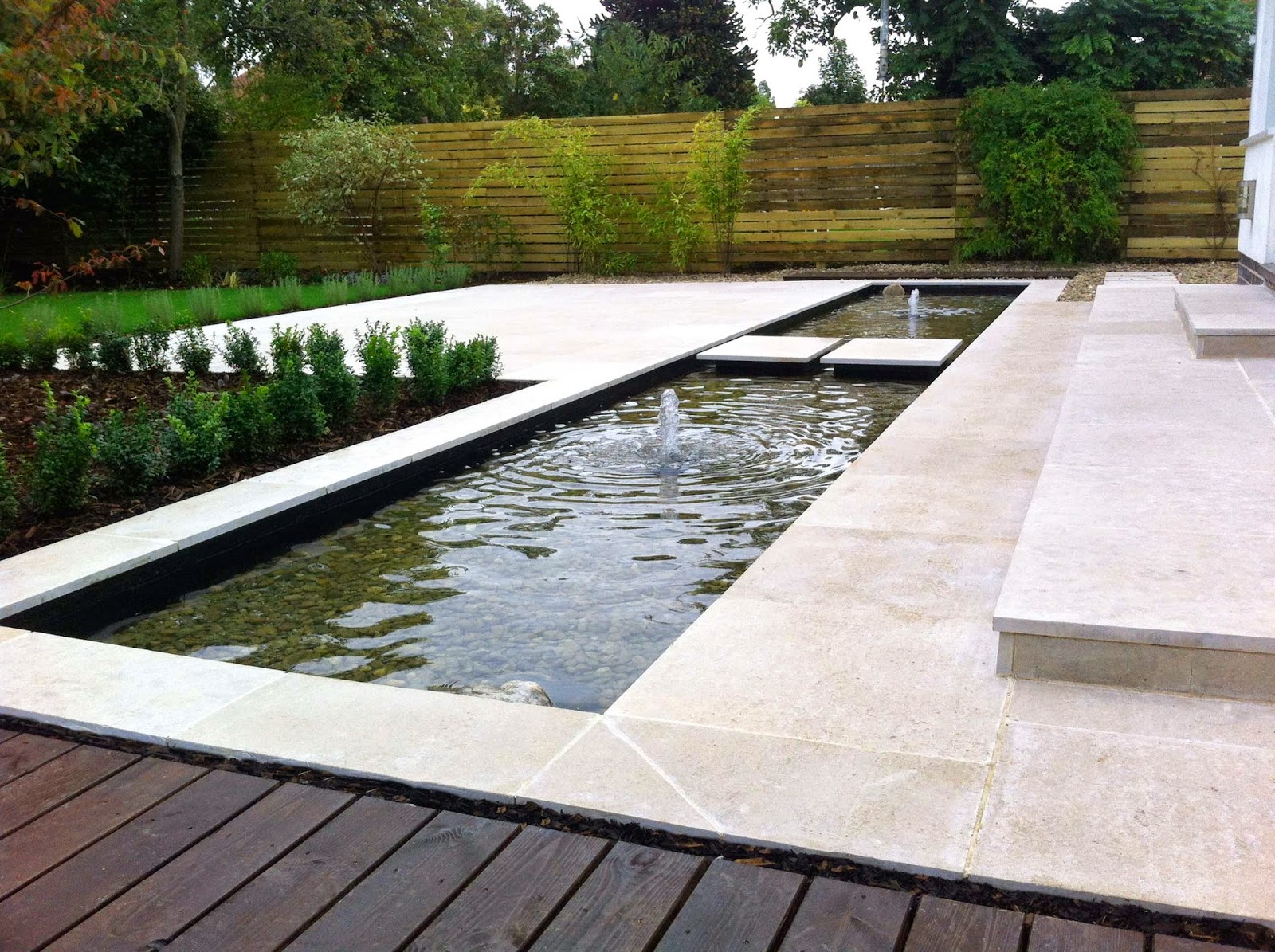
A rill - a long, narrow expanse of water either moving or still, usually used as a border or feature to step over. These are more for the professional installer but once in can be added to with careful planting or lighting to create a slightly bigger effect whilst can be kept from becoming the main attraction if you prefer.

Larger features - Such as water falls, fountains, ponds, pools and water walls. These often become the main feature of a garden and can really create a wow factor, however again care must be taken to match the feature to the style of garden and property, but with a bit of thought these can really make a garden.

The next thing that has to be mentioned here is the maintenance as water has a habit of creating a lot of work if not looked after carefully. You can either go for the totally natural method of plants maintaining the right oxygen and light levels or you can use filters or even chemicals to keep the water from turning to green sludge. Immediate surroundings also play a factor here too; for example a pool under a deciduous tree is going to give you a bit of a headache around autumn when the leaves start to fall. Careful planning can reduce maintenance so unless you're confident in what you're doing its worth spending time researching or getting some advice on the location and method of keeping the water clean.

And finally the other consideration is electrics, whilst there are a number of solar powered water features out there most fail after just a few years and in my experience you're better off spending a bit more and having any pumps or filtration units to the mains. There is no compromise here though as all electrics must be connected and checked by a qualified electrician as water and power can be a nasty combination if you get them wrong!

Show business!


Published 12th July 2014 in The Nottingham Evening Post


With summer well underway the gardening calendar (as far as shows go) is almost up for another year. Only the remaining autumn events and of course this weekend at Hampton Court Palace are left and garden designers across the country are already turning their attention to next years exhibitions.
The time and effort that goes into these shows, especially the gardens takes the full year in preparation (at least!), but what is it all for? Pure entertainment on the day? a few bargains and a chance to enjoy the displays? 
For designers and exhibitors its an obvious opportunity to showcase what we can do, an RHS medal is difficult to come by and it helps to raise the profile of that business but when it comes to the visitor there is so much more to gain. 
Taking away the purchasing power of buying direct from suppliers, the main reason most people go to one of the many RHS exhibitions is to see the gardens. Chelsea is most well known for this and whilst you might not have the £250k budget to build one of the main avenue gardens you can still gain inspiration and get ideas for practical use back at home. The smaller shows such as Tatton, Gardeners world live and Malvern are perhaps more realistic in terms of everyday opportunity but its still important to see these shows for what they are. 
When applying to the RHS to design a garden there has to be a concept, an idea behind the garden, this brief makes up around 20% of the marks and so it has to be equally creative. To say 'We are building a practical family garden that looks great' wont cut it but yet thats what a lot of people want and so as designers we design and build conceptual gardens with the aim of including 'bits and pieces' that could be used directly as they are in a household garden and then perhaps inspire with the rest. 
As a spectator its vital we view the gardens with an open mind, we might not be able to imagine the garden behind our house but you might see a combination of yellow phormiums and purple salvias that inspires a colour scheme that transforms the flower beds into something more interesting.
These gardens we see have been built in 2-3 weeks and are dismantled in just 2-3 days; they're just like a film set and just like a film can make you think about life these shows are there also to inspire. So if you're thinking about a new garden and you want to have a go at it yourself one of the best places you could start is an RHS show, their website will have plenty of pictures of the ones gone and details of the remaining shows this year

For more details of the RHS and its inspirational shows take a look at www.rhs.org.uk/shows-events

Wednesday, 26 November 2014


In an attempt to catch you up with my regular column in the Nottingham Evening Post here is my first article published back in July 2014

So summer is finally here.... I know this because last night as I walked back from parking my truck both myself and the dog were distracted by the amazing smell off the streets multiple bbq's. Never mind that it was mid-week, the sun was out so Nottingham was going to make the most of it. There's something about cooking and living outdoors that attracts us and although some are more outdoorsy than others, everyone loves a good BBQ. Whether it be a quick sausage on a Wednesday evening with the kids or a full on feast with friends and family at the weekend, just getting outside makes us feel better about the world. And you don't need much, a patio, a few chairs and the bbq itself and you're away. But with a few simple improvements you can turn a campsite staple into a summer luxury. 

Raised beds are a fantastic addition to even the smallest of gardens, not only can you grow fresh herbs that pick up a simple salad and steak, but if built correctly they can double up as seating when you run out of emergency chairs. A simple option can be made from timber or you could push the boat out and go for a rendered structure with stone or timber top. We build more and more raised beds and they always help to give interest to the garden, adding that 'outdoor room' feel with structure that can suit any style.

Back to the food, ideal herbs easily grown for a bbq include rosemary (for lamb), chives (for the potato salad), Tarragon (for the chicken) and oregano (for the tomato sauce). I'm also a fan of fresh salad and tomatoes are so easy to grow but yet improve the humble burger immensely. Rocket and similar 'cut and come again' salad leaves are a great side and if you're prepared to get adventurous fennel with a bit of chilli in tin foil is one of my bbq favourites. Whilst most of these can be grown happily in pots and grow bags by putting them up higher in a raised bed you can not only control the soil quality and avoid gardening on your knees but, when designed properly, also integrate them into the bbq area turning that part of the patio into an outdoor kitchen diner and giving that last minute bbq (when the clouds part) the respect it deserves.

Garden design column

After a rather long break I have picked up my pen again (well keyboard actually) and am writing a garden design column for the Nottingham Evening Post published once a month. I started a few months ago but will catch up and enter the article each month here so stay tuned!!

Saturday, 28 August 2010

An Artificial Lawn


Artificial grass was, up until recently, mainly used on market stalls and sports pitches however lately there has been a lot of developments in this market and it was even seen at this years RHS Chelsea Flower Show in one of the main show gardens. So is it a gardeners faux pas or is it now acceptable to use artificial lawns in todays modern garden?

We recently designed a garden for a couple in Nottinghamshire who were unable to maintain a lawn due to health reasons. Whilst in the initial consultation the client asked "so Neil, what do you think to the idea of an artificial lawn?" My instant reaction was perhaps to skirt around the idea but after much deliberation we decided that in order to keep the garden as maintenance free as possible, whilst keeping an area of 'grass' for the grandchildren to play on, this would be the best way forward.

And so the research started.

I looked around for companies that specialised in these lawns and after a bit of time found a couple that seemed to offer the best value for money whilst keeping the lawn realistic. We had seen 'Lazy Lawn' at the 2009 Chelsea flower show and so they seemed to be the logical first point of contact, they offered a number of options at fairly good prices however in the end we decided to use a company called 'NoMow' who offered a full lawn kit including geotextile, turf, glue and pegs for less that £20 per sq metre.

The lawn arrived in a van and the turf looked like a roll of carpet and after a few jokes from the neighbours about saving the off cuts for their hallway we got to work.

After preparing the ground it took us around a day to install just under 60 sq metres and the process was fairly straight forward, the most important tip is definitely to get the ground as perfect and level as possible before hand and make sure there are a few of you to unroll the carpet/turf as its pretty heavy stuff.

The client was delighted with the end result and to be fair I was pretty impressed as looking from a few metres away you couldn't tell it was artificial. The only obvious sign that it isn't real turf is that its nearly impossible to get a lawn looking as healthly as this one did!

I'm still a fan of a real lawn and there are clearly far more ecological and aesthetic benefits from real grass however clearly in the right place an artificial lawn is a good option, its ideal for gardens with dogs where yellow patches blight the view, roof terraces or areas where real turf just isnt practical and small gardens with no where to store a lawnmower.

For more on this garden visit our website @ www.creativerootslandscaping.co.uk